How Socks Can Help With Swollen Ankles and Feet
Wearing compression socks can help reduce swelling in your ankles and feet by promoting enhanced blood circulation and minimizing fluid retention. These socks apply consistent pressure, which stabilizes your ankles and supports circulation. Choosing the right material and compression level is essential to avoid constricting circulation. Proper use of supportive socks can alleviate discomfort and improve overall foot health. For additional strategies to manage swelling effectively, just continue exploring more information.
Understanding Swollen Ankles and Feet
Swollen ankles and feet can occur for various reasons, often indicating an underlying health issue. You might notice swelling due to fluid retention, often linked to heart, kidney, or liver problems. Other common causes include injury, infection, or prolonged standing. Your lifestyle choices, such as diet and exercise, can also impact ankle health and contribute to swelling. Conditions like arthritis or venous insufficiency may further exacerbate the issue. Recognizing these causes of swelling is vital for maintaining your overall well-being. If you frequently experience swollen ankles and feet, it's important to consult a healthcare professional to identify the root cause and develop an appropriate management plan. Understanding these factors empowers you to take control of your health journey.
The Role of Compression Socks
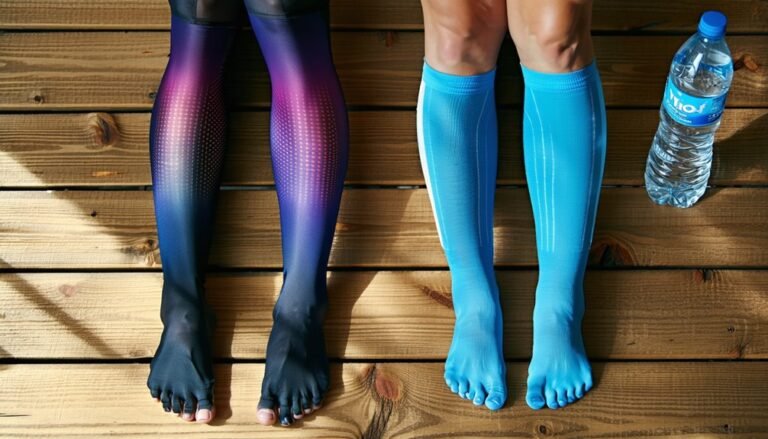
Compression socks play a significant role in managing swollen ankles and feet by applying consistent pressure to the lower limbs. This pressure aids in enhancing blood circulation and reducing fluid retention. When selecting compression socks, consider the appropriate compression levels, typically measured in mmHg, to guarantee effectiveness without discomfort. Higher compression levels are generally recommended for more severe swelling. Additionally, the choice of sock materials matters; breathable, moisture-wicking fabrics can improve comfort during extended wear. By wearing the right compression socks, you can actively support your circulation and potentially alleviate the discomfort associated with swelling. Understanding these factors empowers you to choose the right product that aligns with your specific needs for peak relief.
Benefits of Wearing Supportive Socks
While many people may overlook the importance of supportive socks, they offer several benefits that can greatly improve comfort and mobility. Supportive socks made from specialized supportive materials can provide the necessary compression to alleviate swelling in your ankles and feet. This targeted pressure promotes circulation improvement, which is essential for reducing discomfort and preventing further complications. Additionally, they can stabilize your ankles, reducing the risk of injuries during physical activities. Wearing these socks can also enhance your overall posture by providing better alignment for your feet and legs. By integrating supportive socks into your daily routine, you're not just addressing existing issues, but also taking proactive steps to maintain your foot health and overall well-being.
Choosing the Right Socks for Your Needs
When selecting socks to address swollen ankles and feet, it's essential to take into account factors like material, compression level, and fit. Opt for sock materials that offer breathability and moisture-wicking properties, such as cotton blends or synthetic fibers. These materials can enhance comfort and prevent irritation.
Compression socks are available in varying levels, so you'll want to choose a level that suits your specific needs. Additionally, pay attention to sock sizes; properly fitting socks will provide the necessary support without constricting circulation. Incorrect sizes may exacerbate swelling or discomfort. By carefully considering these factors, you can select the right socks to promote comfort and alleviate the symptoms associated with swollen ankles and feet.
Tips for Managing Swelling Beyond Socks
To effectively manage swelling in your ankles and feet beyond the use of socks, it's crucial to incorporate a combination of lifestyle changes and home remedies. Start with dietary adjustments; reduce salt intake to prevent fluid retention and include potassium-rich foods like bananas and sweet potatoes to promote balance. Additionally, consider incorporating anti-inflammatory foods such as berries and leafy greens. Implement hydration strategies by drinking plenty of water throughout the day; staying well-hydrated helps your body regulate fluid levels. Regular physical activity, such as walking or swimming, can also improve circulation and reduce swelling. Finally, elevate your feet whenever possible to encourage fluid drainage and alleviate pressure. These combined efforts can greatly enhance your comfort and mobility.
Frequently Asked Questions
Can Socks Prevent Swelling During Long Flights?
Yes, wearing compression socks during long flights can greatly improve flight comfort. Their compression benefits enhance circulation, reducing the likelihood of swelling in your ankles and feet, allowing you to arrive feeling more refreshed and comfortable.
How Often Should I Replace My Compression Socks?
Picture your compression socks as trusty allies. To maintain their effectiveness, consider replacing them every six months, as the compression sock lifespan diminishes with use. Regularly checking for wear guarantees peak support and comfort when you need it.
Are There Specific Sock Materials to Avoid?
When considering sock materials, avoid those made from synthetic fibers that restrict airflow, as they may exacerbate circulation issues. Opt for breathable, moisture-wicking fabrics to guarantee comfort and maintain peak circulation for better foot health.
Can Children Wear Compression Socks for Swelling?
Yes, children can wear compression socks for swelling. They offer compression benefits that support children's health, promoting circulation and reducing discomfort. However, consult a healthcare professional to guarantee the proper fit and material for your child.
What Are the Signs That Socks Are Too Tight?
If socks are too tight, you might notice discomfort, redness, or indentation on your skin. This sock pressure can lead to circulation issues, causing numbness or tingling. Always guarantee your socks fit properly for comfort and health.