Can Tight Socks Cut Off Circulation?

Tight socks can impede circulation, leading to potential health issues. They may cause numbness, tingling, or discoloration in your feet and toes, indicating restricted blood flow. Symptoms like indentations on your skin suggest a need for better-fitting socks to support venous return without unnecessary constriction. Choosing breathable fabrics and consulting sizing charts guarantees ideal circulation…

socks hole repair tips

Quick DIY Fixes for Holes in Socks (No Sewing Needed!)

Have you ever noticed how socks always seem to develop holes at the most inconvenient times? Fixing sock holes doesn't require sewing skills! You can use iron-on fabric patches for a quick, stylish fix, or apply fabric glue around the hole's edges, pressing it together with reinforcement from an old sock. Sock-saving adhesives like liquid…

socks longevity maintenance tips

How to Make Your Socks Last Longer: Simple Tricks to Prevent Wear & Tear

Have you ever noticed how quickly socks seem to wear out? To make your socks last longer, select durable materials like wool or fabric blends and ensure a proper fit to prevent wear. Wash them with a gentle detergent in appropriate temperatures and air dry to maintain fiber integrity. Rotate pairs to distribute wear evenly…

wearing compression socks overnight

Can You Wear Compression Socks to Sleep?

Wearing compression socks to sleep can enhance circulation and reduce swelling, but it's crucial to consult your healthcare provider first. Poorly fitted or excessively tight socks might disrupt sleep, cause skin irritation, or exacerbate existing circulatory issues. If you have conditions like peripheral artery disease or congestive heart failure, avoid overnight use. Consider your medical…

sock pressure comparison differences

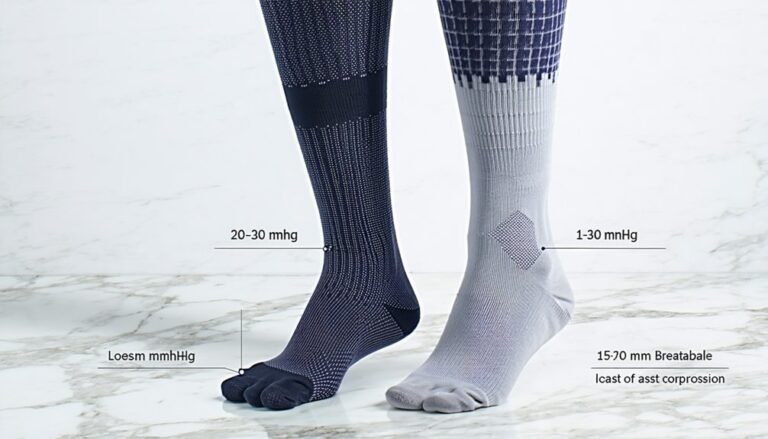
Compression Socks 20-30 Mmhg Vs 15-20 Mmhg

When deciding between 15-20 mmHg and 20-30 mmHg compression socks, consider your health needs. The 15-20 mmHg range suits everyday wear, offering comfort and minor swelling relief, while 20-30 mmHg is ideal for significant swelling or medical conditions like chronic venous insufficiency. Proper selection should be guided by a healthcare professional to enhance venous return…

tabi socks global impact

How Japanese Tabi Socks Have Influenced Global Fashion

Have you ever noticed how a simple pair of socks can carry a rich cultural heritage? Japanese tabi socks, with their distinctive split-toe design, have seamlessly woven their traditional roots into the fabric of global fashion. Imagine spotting them on the runway, embraced by high fashion for their unique silhouette, or seeing their minimalist appeal…

sock versus sleeve comparison

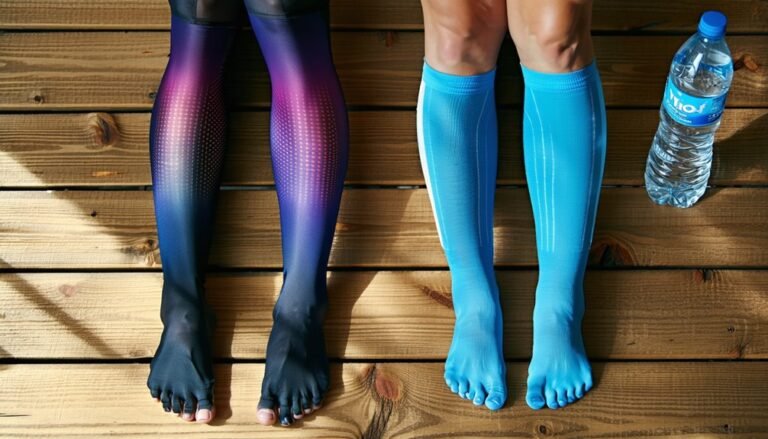
Compression Sock Vs Sleeve

When considering compression sock vs. sleeve, it's essential to understand their distinct benefits. Compression socks cover the foot and knee, enhancing venous return and reducing swelling, ideal for long periods of standing or sitting. Compression sleeves focus on the calf, supporting muscle recovery and minimizing fatigue, beneficial for athletes. Materials and compression levels affect comfort…

mass production of socks

The First-Ever Sock Factory: How Mass Production Revolutionized Footwear

Imagine walking down the bustling streets of an 18th-century town, where the clatter of horse-drawn carriages mingles with the chatter of citizens. In this vibrant setting, a revolutionary change in the world of fashion is quietly unfolding. The establishment of the first-ever sock factory marks a pivotal moment, transitioning from labor-intensive hand-knitting to the wonders…

compression socks prevent varicose veins

Can Compression Socks Help Prevent Varicose Veins?

Compression socks can effectively help prevent varicose veins. They apply graduated pressure, primarily at the ankle, enhancing venous return and reducing venous pressure. This supports circulation, mitigating the risk of blood pooling. Clinical evidence underscores their efficacy, especially at compression levels of 15-20 mmHg to 30-40 mmHg for severe cases. The choice of durable, breathable…

sleeves versus compression socks

Compression Sleeve Vs Socks

When choosing between compression sleeves and socks, each has its benefits. Compression sleeves target specific areas like arms or legs, enhancing circulation and muscle support without foot restriction. Socks provide extensive leg coverage, decreasing DVT risk and boosting venous return. Both options come with various compression levels, so consulting a healthcare provider is essential for…