Why Socks Were Once a Symbol of Wealth and Status
Imagine this: You're walking through a bustling 18th-century marketplace, surrounded by merchants hawking their vibrant wares. Amidst the cacophony, your eyes catch a glimpse of a gentleman proudly displaying his ornate silk socks, a clear symbol of his wealth and status.
Have you ever noticed how something as simple as socks could once convey such opulence? In ancient civilizations, socks were meticulously crafted from luxury materials like silk and were a testament to one's social standing.
The Renaissance era took this a step further with elaborate patterns and fine textiles that highlighted elegance. As fashion evolved, shorter breeches in the 18th century emphasized these luxurious socks.
However, with industrialization, the once-exclusive hosiery became accessible to all, transforming personal style into a new form of expression.
Discover more about this fascinating evolution.
The Origins of Socks in Ancient Civilizations
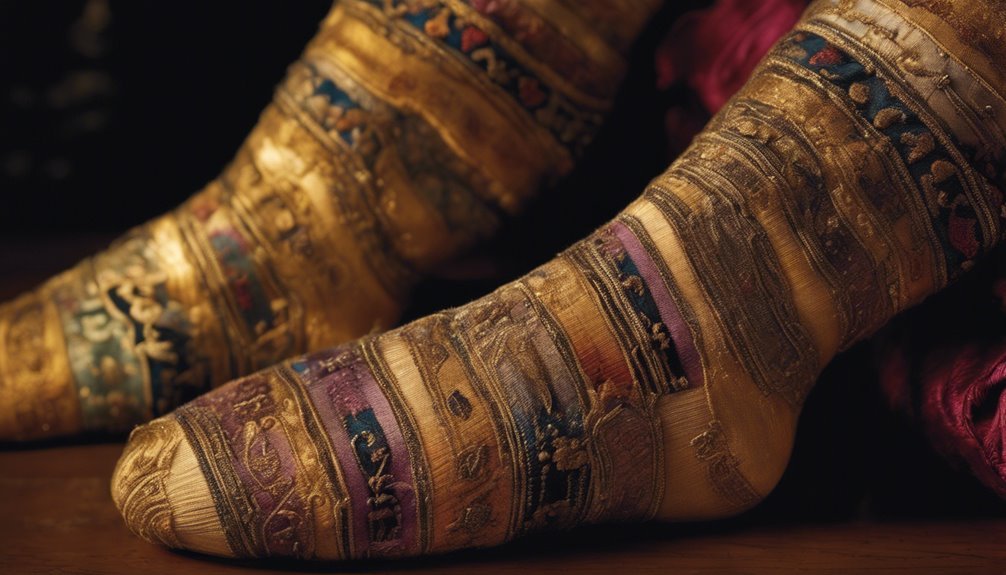
Although socks might seem like a mundane item today, their origins trace back to ancient civilizations where they held significant cultural and practical value. You'll find that ancient textiles were more than just woven fibers; they were symbols of status and identity. In Egypt, socks made from fine linen were discovered in tombs, reflecting their cultural significance and association with the afterlife. Meanwhile, the Greeks and Romans used socks crafted from animal skins and woven materials, underscoring their utility and societal nuances. These items offered warmth and protection but also indicated wealth, as only the affluent could afford such luxurious materials. Understanding this context reveals how socks were not merely functional but represented a deeper connection to cultural heritage and societal structures.
Renaissance Elegance: The Rise of Ornate Hosiery
As the Renaissance dawned, a period marked by flourishing art and culture, hosiery transformed from simple garments to elaborate symbols of opulence and sophistication. You'd notice that ornate designs became integral to these fashion statements. Intricately embroidered with gold and silver threads, these luxurious items were more than just accessories; they were declarations of status. No longer hidden beneath robes, hosiery was boldly exposed, accentuating the elegance of the wearer. The wealthy flaunted their freedom through the choice of materials and patterns, a vivid expression of personal wealth. With each pair, you were not just keeping your feet warm but making a statement about your place in society, reflecting the artistry and innovation of the Renaissance era.
The Role of Socks in 18th Century Fashion
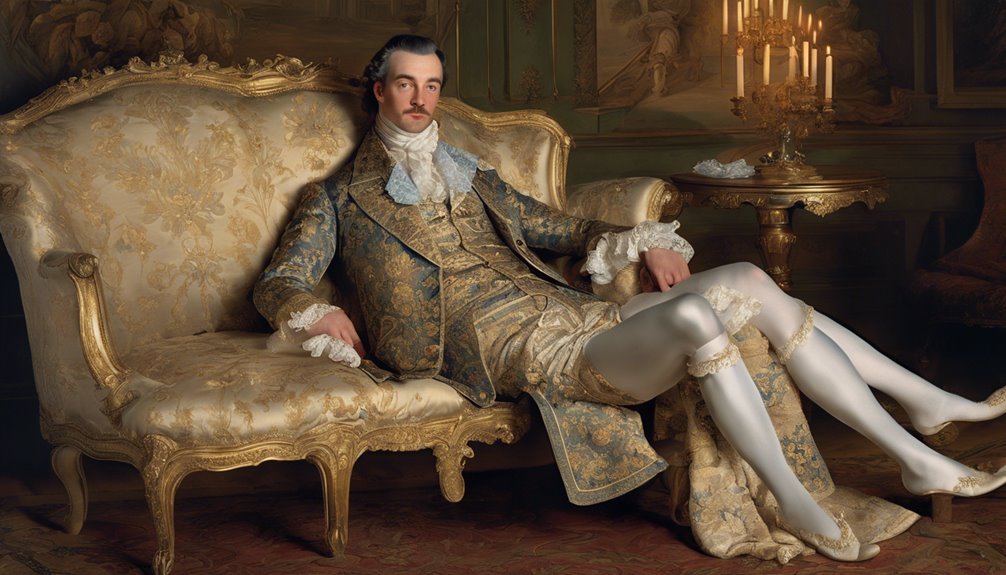
Moving from the opulent display of Renaissance hosiery, the 18th century saw socks take on a more nuanced role in fashion. During this period, socks' significance shifted as they became integral to the fashion evolution. You might notice how men's breeches shortened, making socks a prominent part of their attire. This era emphasized subtle sophistication over ostentatious designs.
- Color coordination: Matching socks with breeches and coats became essential.
- Length variations: Knee-length styles signified formal occasions.
- Pattern simplicity: Stripes and small motifs replaced elaborate Renaissance patterns.
- Social distinction: Different materials indicated social status.
- Practicality over extravagance: Comfort and fit gained importance.
Understanding these shifts highlights how personal expression and societal norms molded socks into more than mere accessories.
Materials and Craftsmanship: What Made Socks Luxurious
While the 18th century refined the aesthetic role of socks, it was the materials and craftsmanship that truly elevated them to a symbol of luxury. Imagine the allure of silk socks, a product of meticulous silk production, signifying not only wealth but also a certain sophistication. The material's smoothness and sheen were unmatched, providing a tactile extravagance that spoke to one's social standing.
Advanced knitting techniques transformed socks into intricate works of art. Skilled artisans employed methods that allowed for elaborate patterns and snug, comfortable fits. These techniques were not merely functional; they were a demonstration of the wearer's access to the finest craftsmanship. In a world where personal freedom was often limited, possessing such luxuries offered a taste of autonomy and distinction.
The Decline of Socks as a Status Symbol
Despite the luxurious craftsmanship and materials that once defined socks as opulent accessories, their role as a status symbol began to wane with the advent of industrialization. Mass production enabled widespread access, leading to fashion democratization. This shift let you embrace personal style without the constraints of wealth. As socks became more affordable, their exclusive aura diminished, paving the way for casual wear.
Consider these factors:
- Innovative machinery: Automated knitting reduced costs and increased accessibility.
- Cultural shifts: The rise of casual wear blurred the lines of status.
- Global trade: Diverse materials and designs became available worldwide.
- Fashion cycles: Trends evolved quickly, making it hard for socks to maintain status.
- Individual expression: People prioritized comfort and personal taste over status.
This evolution granted freedom in fashion choices.
Frequently Asked Questions
How Did Socks Become a Status Symbol in Society?
You're probably wondering about socks' historical significance in fashion. They became a status symbol due to intricate designs and costly materials, marking wealth. The exclusivity and craftsmanship reflected one's social standing, restricting freedom for lower classes.
Were Socks Gifted Among Nobility and Royalty?
You'd find sock gifting was common among nobility and royalty, reflecting more than just royal fashion. These exchanges symbolized alliances, wealth, and status, giving individuals a sense of freedom from the constraints of social hierarchy.
Did Any Specific Events Influence the Perception of Socks as Luxurious?
You're curious if events shaped socks' luxury perception. During the Renaissance, fashion shifted, emphasizing intricate sock materials like silk and fine wool. These trends, coupled with art and culture's evolution, elevated socks as symbols of opulence.
Were There Any Cultural Meanings Associated With Sock Colors?
You're curious about sock color symbolism and cultural associations. Various societies linked colors to status, emotions, or roles. For example, red might signify power, while white could denote purity. Understanding these meanings offers insight into historical social dynamics.
How Did the Invention of the Knitting Machine Impact Sock Production?
With knitting technology, sock manufacturing transformed dramatically, enabling mass production and reducing costs. You'd notice how this innovation democratized access, allowing greater freedom in personal style, as socks became affordable and varied for more people.